We are building
The Intelligence Layer for Health Justice
Community Catalyst is building the intelligence infrastructure to give communities and the organizations that serve them greater capacity, better intelligence, and more power to shape the systems that affect their health.
Three products. One intelligence layer.
Each product stands alone. Together they're the same three capabilities the other side of the table has always had: radar, muscle, and voice.
Capacity Accelerator
Give every community organization intelligent capacity.
AI-powered capacity, Community Catalyst expertise, and trusted human support to help organizations fundraise, communicate, research, organize, and advance policy.
Explore Capacity Accelerator → The voiceHealth Justice Intelligence
Turn community voice and data into collective intelligence.
Bring together lived experience, data, research, and organizing knowledge to see what communities are experiencing, identify what is changing, and turn insight into coordinated action.
Explore Health Justice Intelligence → The radarCommunity Health Market Watch
See changes in health markets before they reshape communities.
AI that reads the public record the way investors do — predictive power communities have never had — and routes the warning to the people with standing to act, before it's too late.
See it in the real world →Capacity Accelerator
Give community-based organizations infinite capacity to communicate, fundraise, and take action. Capacity Accelerator brings together AI, Community Catalyst expertise, and a trusted network of people and partners — giving every community-based organization the capacity to do more with what they already have.
AI Teammates
Your organization's always-on team for communications, fundraising, research, and rapid response. Create. Discover. Act.
Community Catalyst Expertise
Put Community Catalyst's research, policy expertise, tools, and resources directly into the hands of the organizations doing the work. Relevant expertise. Personalized to your community. Ready when you need it.
Human Expertise + Partner Network
When AI isn't enough, connect directly to trusted people and specialized services — from policy and legal support to strategy, design, and technical assistance. AI-powered when you want it. Human-powered when you need it.
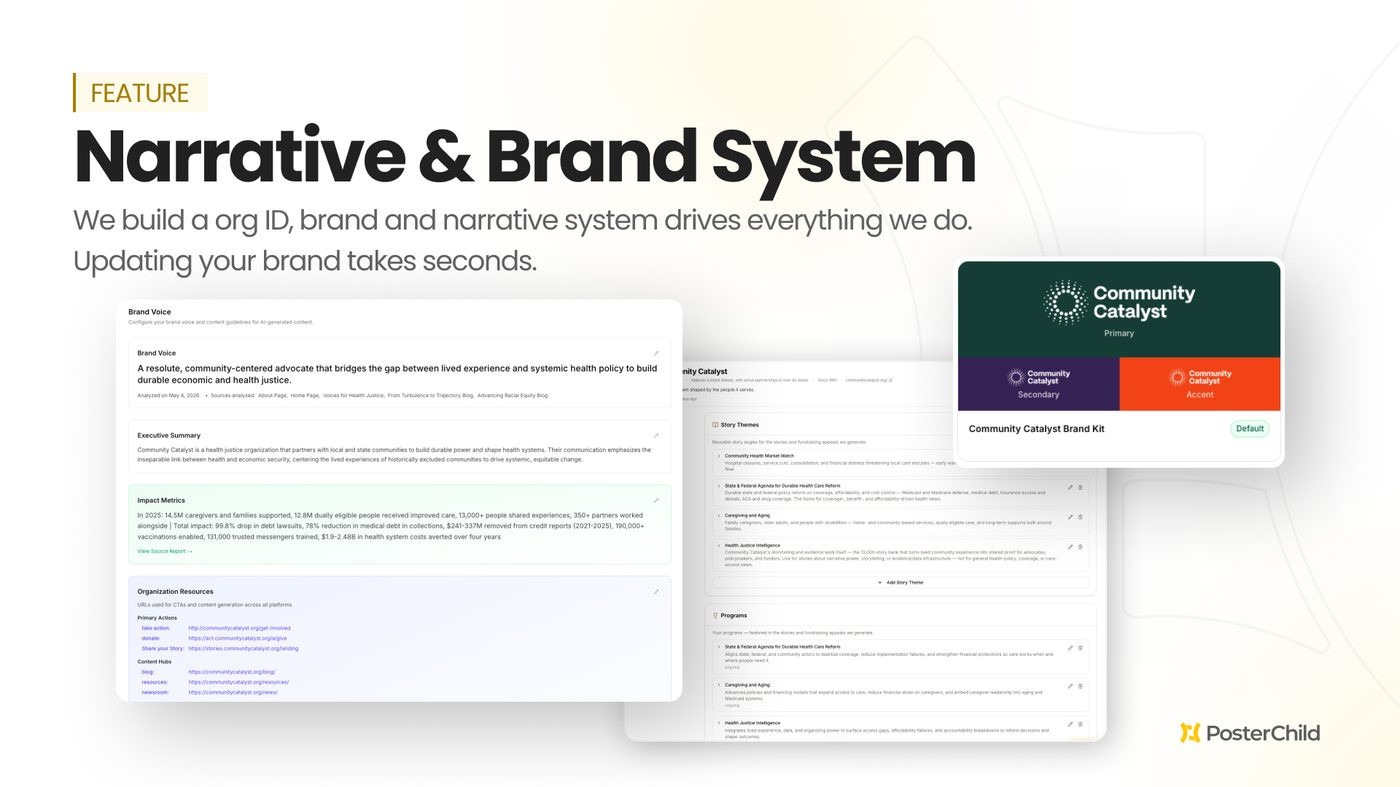
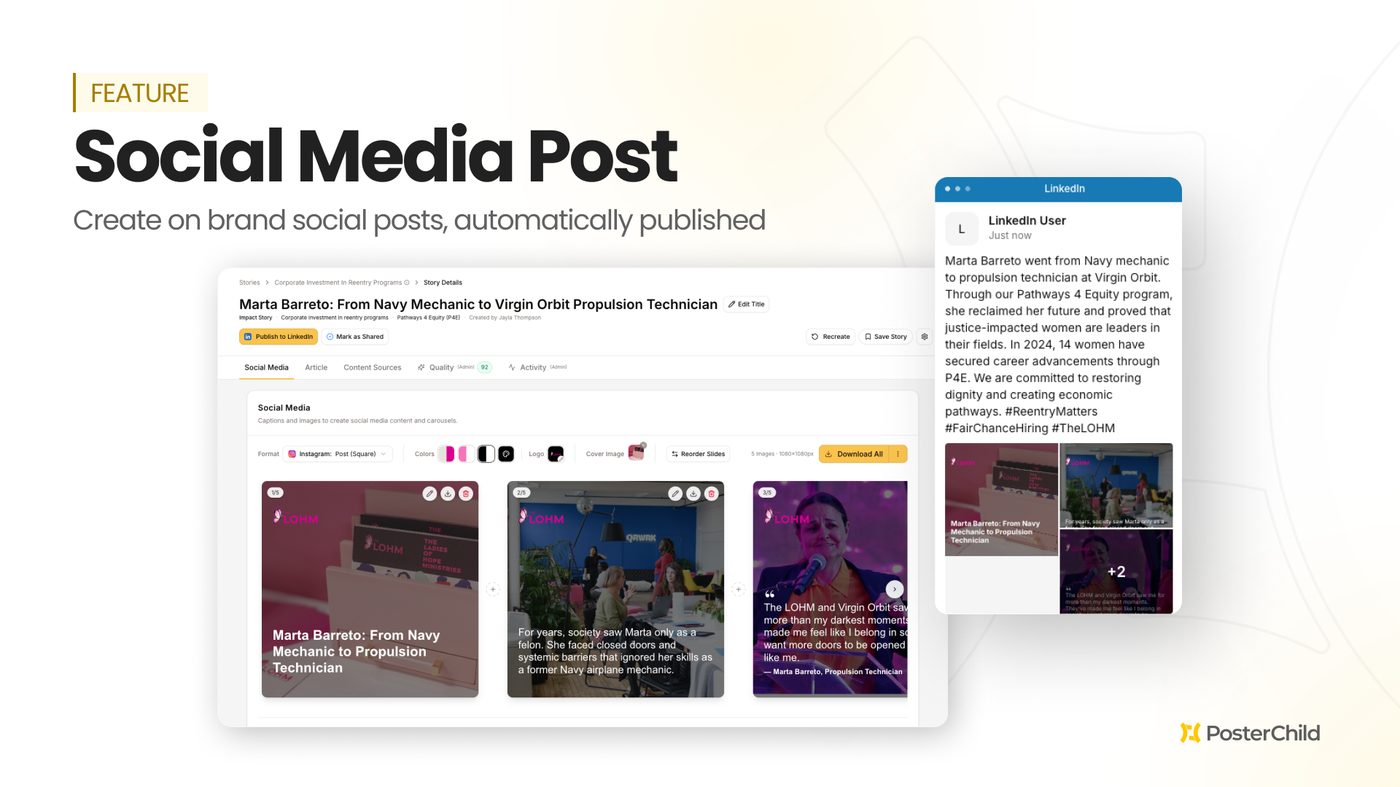
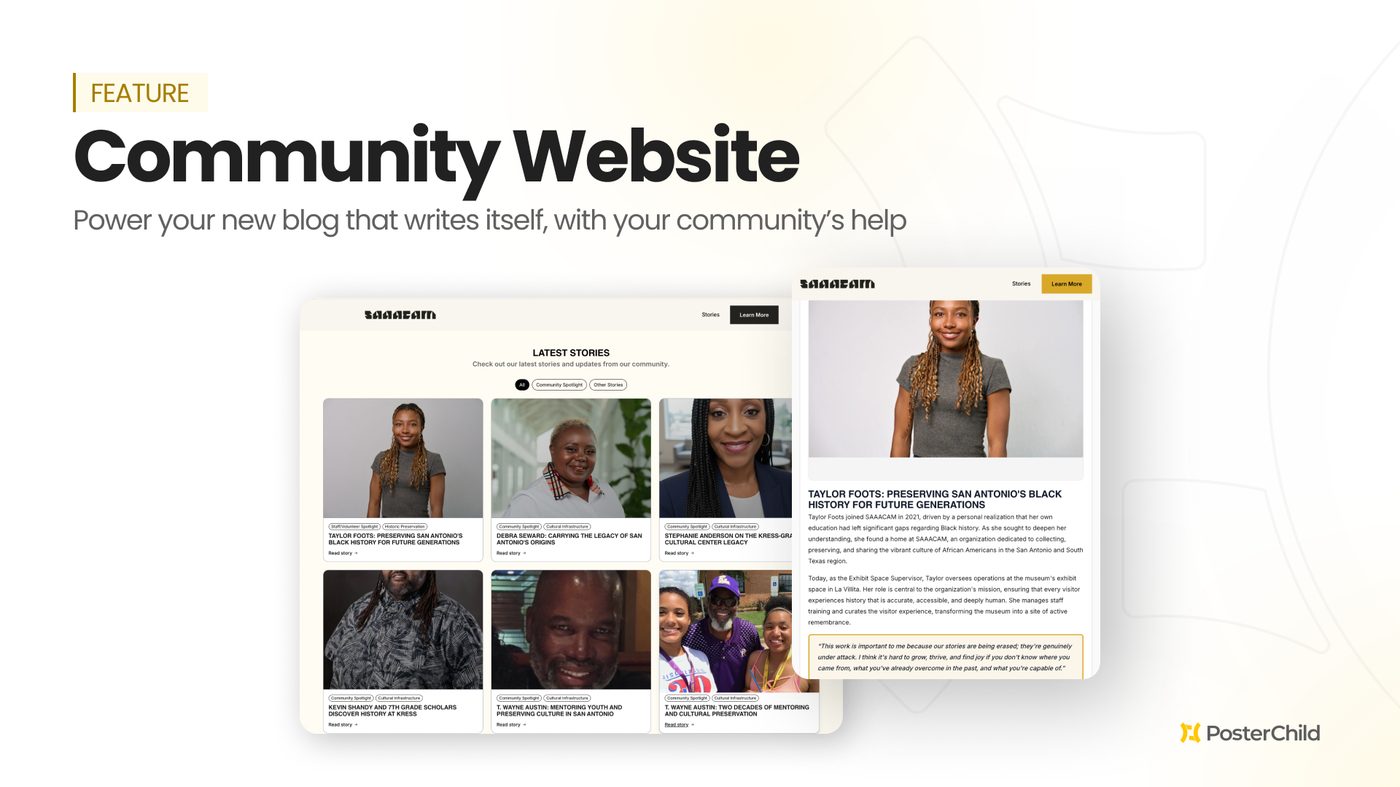
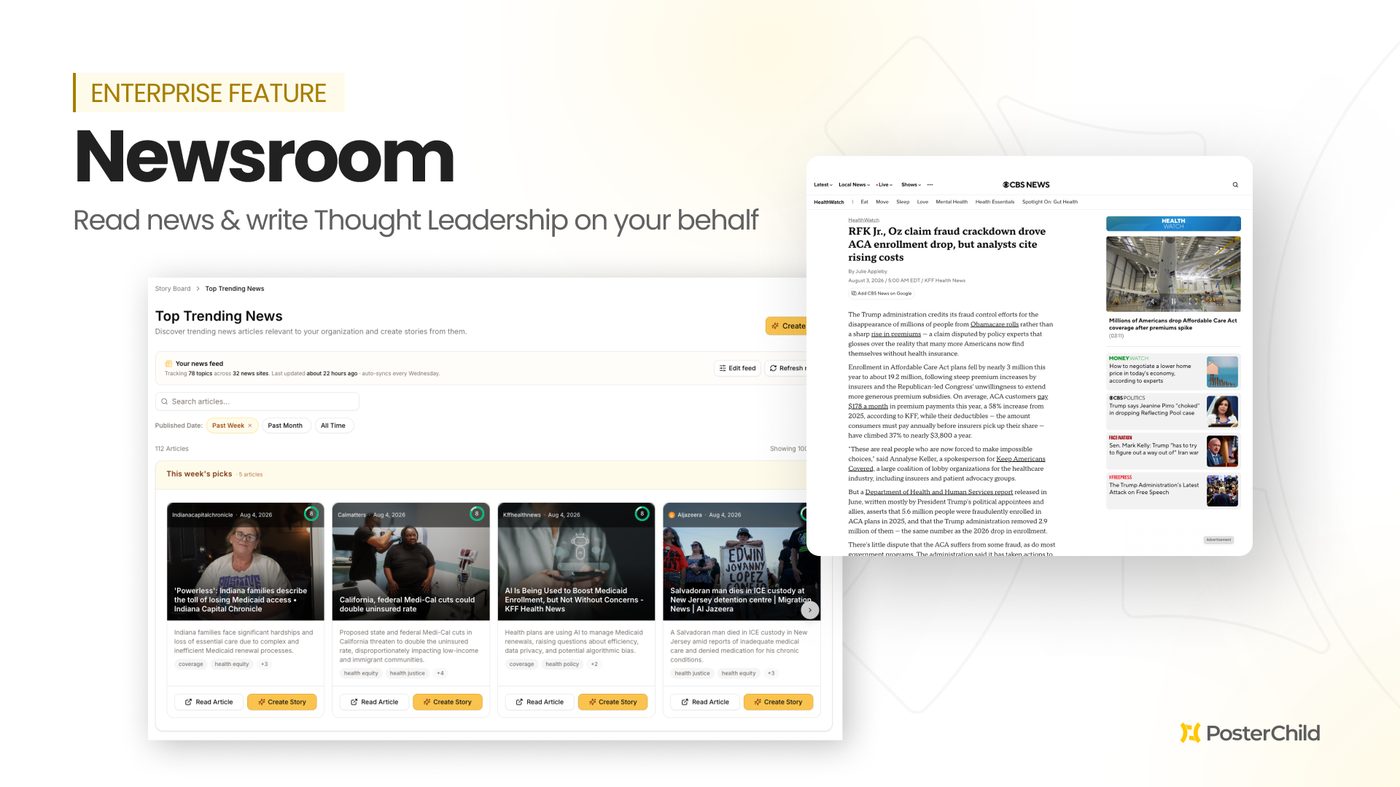
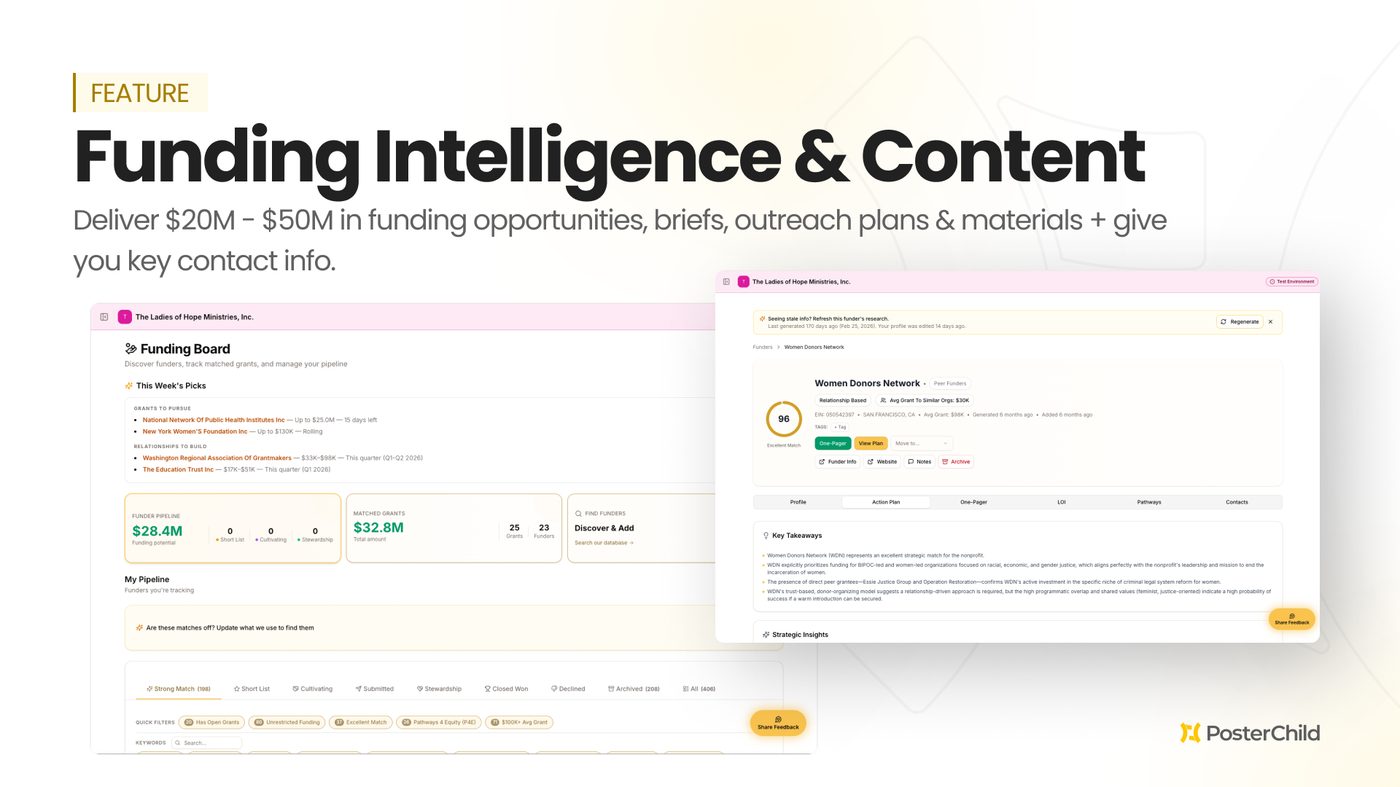
One place to get more done.
Health Justice Intelligence
Turn community voice and data into collective intelligence. A shared intelligence layer that brings together lived experience, research, data, and organizing knowledge — so communities can see what is happening, identify what is changing, and act together.
See What Communities Are Experiencing
Turn thousands of community voices into a living picture of health justice. Surface the issues, experiences, needs, and priorities emerging across communities — in real time.
Find the Signals in the Noise
AI identifies patterns that no single organization could see alone — emerging issues, geographic trends, common experiences, and gaps between what communities need and what systems are delivering.
Ask Your Community
Go from questions to insight in minutes. Ask natural-language questions across the collective intelligence layer and explore what communities are saying, where patterns are emerging, and what is changing over time.
Turn Intelligence Into Action
Move from insight to coordinated action — research, campaigns, policy priorities, communications, funding opportunities, and organizing strategies.
Harm Types
12,544 labeled of 14,290 classified
Systems That Failed
11,677 labeled of 14,290 classified
Severity Distribution
of classified stories, level 1 (minimal) to 5 (acute)
Outcomes
12,861 labeled of 14,290 classified
Demographics & Geography
Gender
1,342 labeled of 14,290 classified
Age Range
2,480 labeled of 14,290 classified
Race & Ethnicity
129 labeled of 14,290 classified
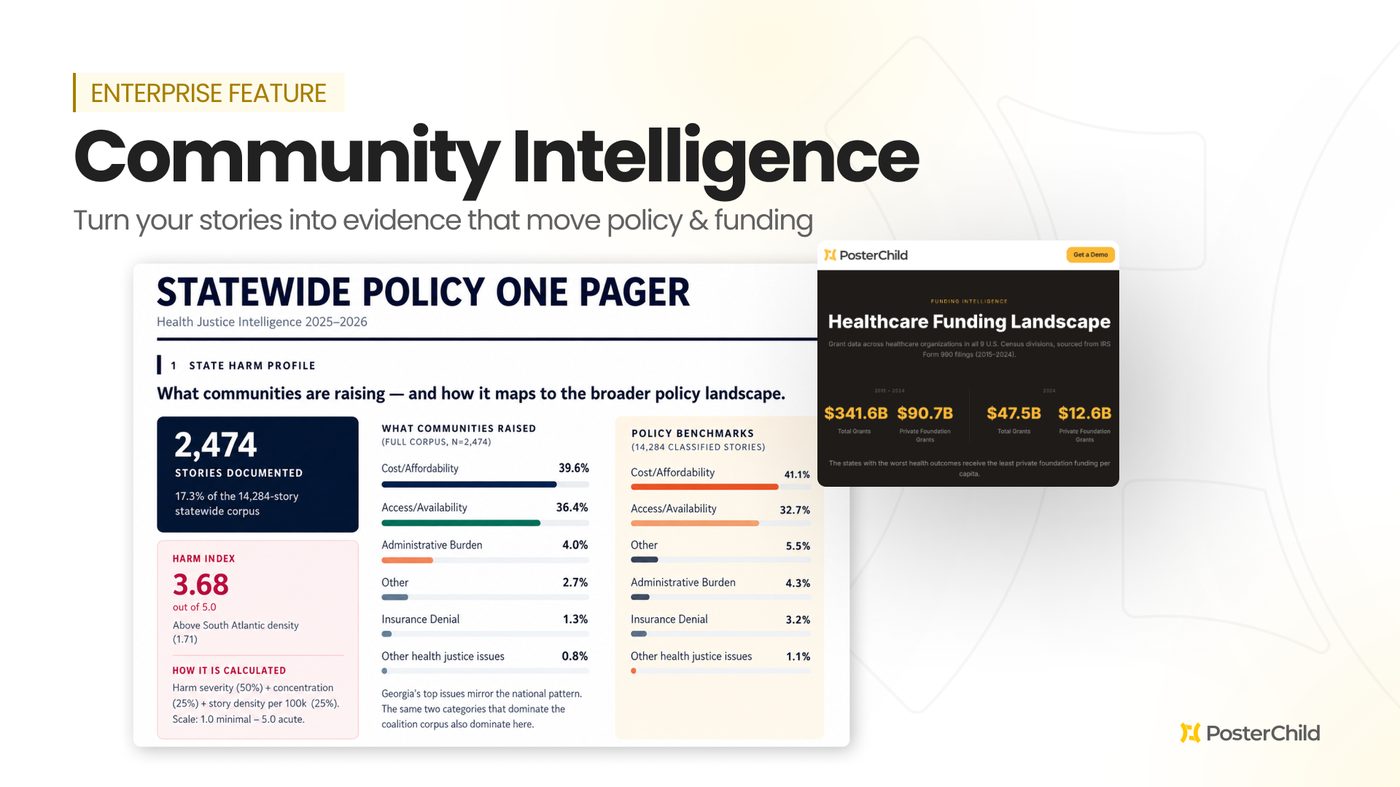
A living intelligence layer for the movement. The more communities participate, the smarter the system becomes — and the more powerful the collective becomes.
Community voice → Intelligence → Action → Change
Community Health Market Watch
The other side of the table always knows first. When a hospital starts to fail, investors have been watching for a year. Hospital systems have analysts. Private equity has data feeds. The community — the people whose births, emergencies, and last years of life run through that building — finds out from the news, when the only thing left to organize is grief. Market Watch closes that gap: it reads the same public record, and it reads it for communities. Here is what that means, told through one true story.
Act one · a true story
Madera Community Hospital was the only hospital in its county — 156,000 people, 735 births a year, the nearest alternative thirty miles away. It didn't fail quietly. It failed in public, in filings, for nearly a year: affiliation talks, a bridge loan, an economist's written warning to the Attorney General that closure would be devastating.
Nobody was reading on the community's behalf. There were 139 days of formal regulatory process — a public proceeding with standing to comment — and it came and went with almost no organized community presence. Most of the county learned the hospital was dying twelve days before it closed.
$57 million of public money eventually reopened the building. The maternity ward never came back. Madera's families still leave the county to give birth.
Act two · the same year, replayed
What follows is a replay, not a record — the same documented timeline, with the three products in place. Nothing below invents a fact; it changes who gets to act on the facts, and when.
The community learns when the investors do.
The affiliation announcement — the first public sign the hospital can't survive alone — is detected the week it's published, matched against two years of visibly deteriorating finances the system was already reading. A briefing goes to the organizations with standing to act: here's what's happening, here's the record, here's the clock. This isn't hypothetical machinery: the system that exists today caught a hospital layoff filing six days after it hit the state's files, with no human watching.
A two-person nonprofit becomes a campaign.
The county's community health coalition runs on three overworked people. With an AI-powered capacity layer and Community Catalyst's organizers behind them, they can do in weeks what used to be impossible at any speed: brief county supervisors, draft the public comments, organize the town halls, work the press — while still doing Tuesday's intake.
The community walks into the review with a case.
The deal enters the Attorney General's public review — 139 days in which conditions can legally be attached. Last time, that room held the parties, the regulator, and consultants. This time the community files too: what the ER means at 2am, what thirty miles means in labor, documented in residents' own voices and validated into evidence a regulator can cite. The ask is specific: bind the buyer to keep obstetrics open, with enforcement.
Nobody can promise the hospital survives. We can promise the fight happens.
Maybe the deal still collapses. But it collapses with the community organized, on the record, and holding leverage — not reading about it in the paper with twelve days left. And sometimes the fight is won: comments filed, conditions attached, a maternity ward that stays open. That is the product. Not a dashboard — a fair fight.
Market Watch is live today — 2,873 facilities across three states, with the public record cached behind every signal. See the live map